Podcast Episode 3 Show Notes

For their 3rd pick the girls discuss the New York Times Bestseller fantasy novel Legendborn by Tracey Deonn

About the Author

Tracey grew up in  North Carolina with a geeky nature and a fan girl spirit. She believes in diversity and representation in science fiction and has written for the Star Wars franchise. Tracey has also written non-fiction for our stories and our voice anthology.  Earned a bachelors and masters degree for communication and performance studies which lead her to working in theater, video game production, and education. 

Book Look

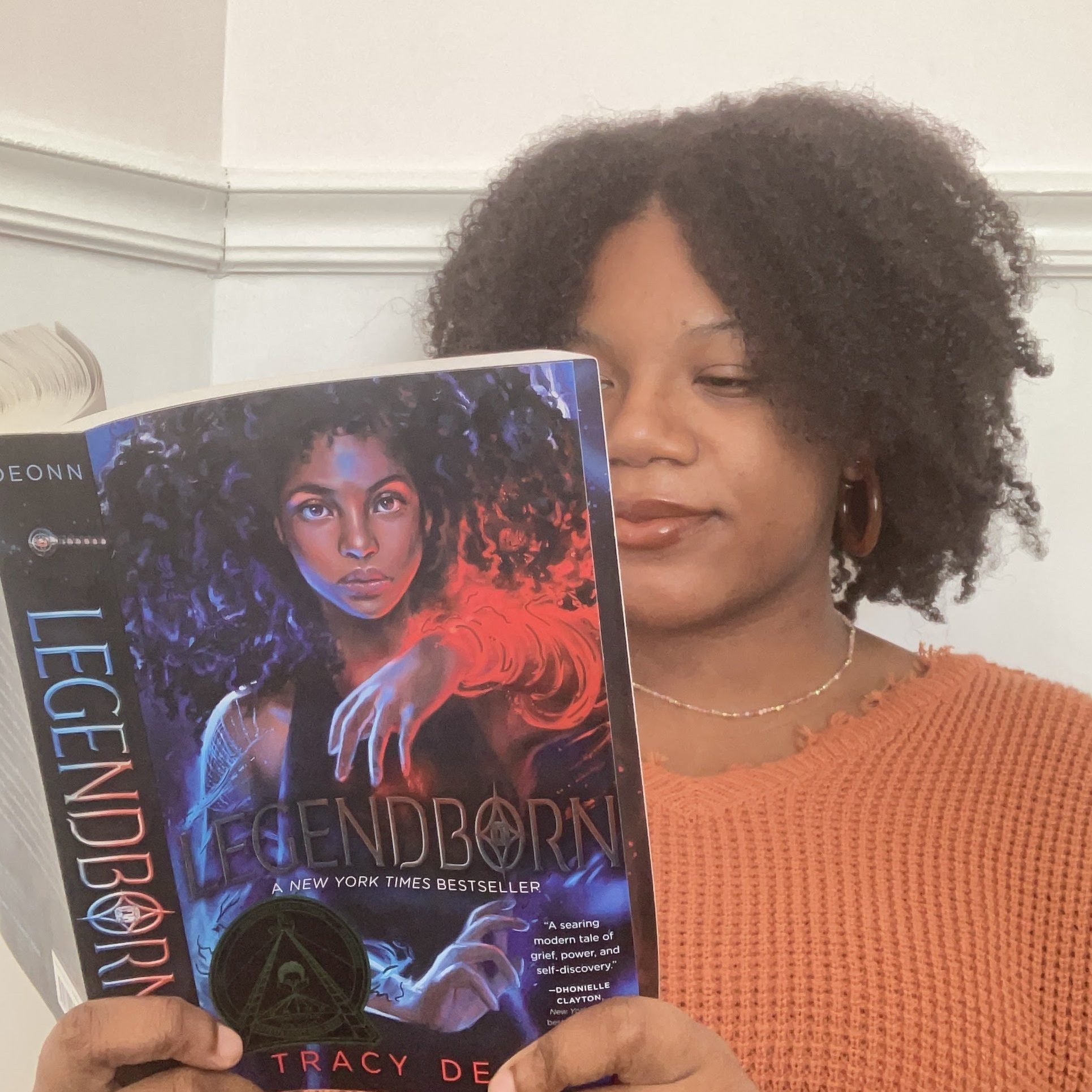
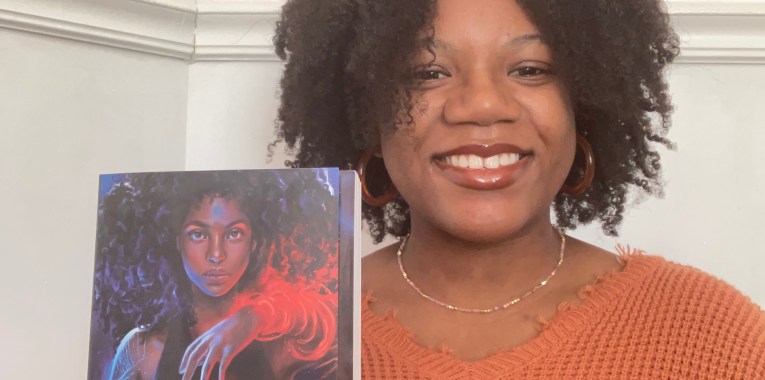
The sisters discuss how they were captivated by the colorful cover and the magic already on full display. They also connect with the fact that there is a Black girl on the cover, emphasizing that this story will center around a character that looks like them and they can identify with. 

Bookmark

Felicia admitted that her favorite part of the book was the Author Notes because it brought everything about the book full circle for her. Sam struggled with the book until about page 200 but she began enjoying the way the King Arthur legend and African American roots started to come together. The quotes they discussed touched on one of the major themes in the book – African American heritage and lineage: 

  • “To be able to trace one’s family back that far is something I have never fathomed. My family only knows back to the generation after Emancipation. Suddenly, it’s hard to stand here and take in the magnificence of the Wall and not feel an undeniable sense of ignorance and inadequacy. Then, a rush of frustration because someone probably wanted to record it all, but who could have written down my family’s history as far back as this? Who would have been able to, been taught to, been allowed to? Where is our Wall? A Wall that doesn’t make me feel lost, but found. A Wall that towers over anyone who lays eyes on it. Instead of awe, I feel… cheated.” p 135
  • But how can I be at peace when I look down and see that they’re still working? You know? 

POV

Sam’s favorite character was Bree’s father and found him to be quite progressive. She found all the other characters to be likable at moments and others not so much – she even the main character Bree at times. Felicia’s least favorite character was Tor, one of the higher ranked Legendborn members and her favorite characters were Bree and William (the healer). 

Deep Dive

Sam and Felicia ultimately loved the book, the story never left its fantasy element but managed to keep an authentic Black voice throughout. Felicia loved the mix of medieval lore and African American ancestry. She’s looking forward to reading more about root magic in the sequel. Sam is also looking forward to the sequel but hopes there is a more diverse love interest introduced – she’s not looking forward to the 700 pages but is excited to read about these characters again. 
Legendborn | Book Review by Felicia

This is a wonderful 4.5 star rating kind of book. I don’t know why it took me so long to read Legendborn but I completely understand the hype it has been given. I was truly locked in and loving this novel all the way through. 

Felicia Reading Legendborn

About: 

Legendborn is a fantasy novel about Bree Mathews, a young Black girl who needs to work through her mothers death. While attending an early college program Bree learns that there might be more to her mothers death than meets the eye. This launches Bree on a quest to discover the truth about her mom’s death and along the way she uncovers a world of magic.

Review:

This novel is loosely based on Arthurian legend. But, don’t expect it to follow the typical storyline. Tracey Deonn writes a new and fresh perspective to the traditional King Arthur tale. Lgenedborn eloquently incorporates a diverse tone to the writing that acknowledges aspects of race, class, and gender. I really appreciated the way Deonn recognized diversity in her writing in such a seamless way. The importance of race, class, and gender truly elevated the story. 

Set in four parts this novel perfectly introduces readers to a new and fantastical world. In part one, Order, you realize that nothing in Bree’s, the main characters, life is in order.  After her mothers death, Bree is understandably struggling to move on. In an attempt to regain order in her life Bree joins an early college program that allows her to attend classes at her moms alma mater. As Bree starts the early college  program she is thrust into a magical secret society,The Order of the Round Table.

 Part two, Discord, Bree learns  not to take things at face value. The secret society claims that they are about protecting humans from demons but Bree witnesses how there might be more to the Order of the Round Table that isn’t too great. The Order of the Round Table has a long history of excluding people who don’t fit their mold or idea of what it takes to protect humanty. 

Part three ,Root, Bree really gets the chance to connect with her ancestors. Bree discovers new information about her own family history when she starts therapy. Her therapist shares information about Bree’s mom and shares how Black people have practiced root magic for centuries.  Tracey Deonn uses the history of American slavery to introduce root magic, a form of magic that was passed down to the descendents of enslaved people. They learned a completely different type of magic that is deeply connected to honoring ancestors. 

 Part four, Splinter, so much has been introduced to the reader between different types of magic, history, and monsters to keep up with. In addition, Bree continues to surprise everyone around her by channeling great power instead of being a damsel in distress. In the end, we are left with a cliffhanger but it’s a cliffhanger that I am content with. 

This was such a great read! I can’t stop thinking about this novel and the world Tracey has created. It has elements of Arthurian legend but it included so much more. This goes beyond a young adult novel; it encompasses so many creative pieces mixed with  rich history.  In addition Deonn writes about the power within family, community, and oneself . I am definitely looking forward to the next book in this series and hope you read it too. 

You Don’t Know Us Negroes | Book Review by Sam

About:

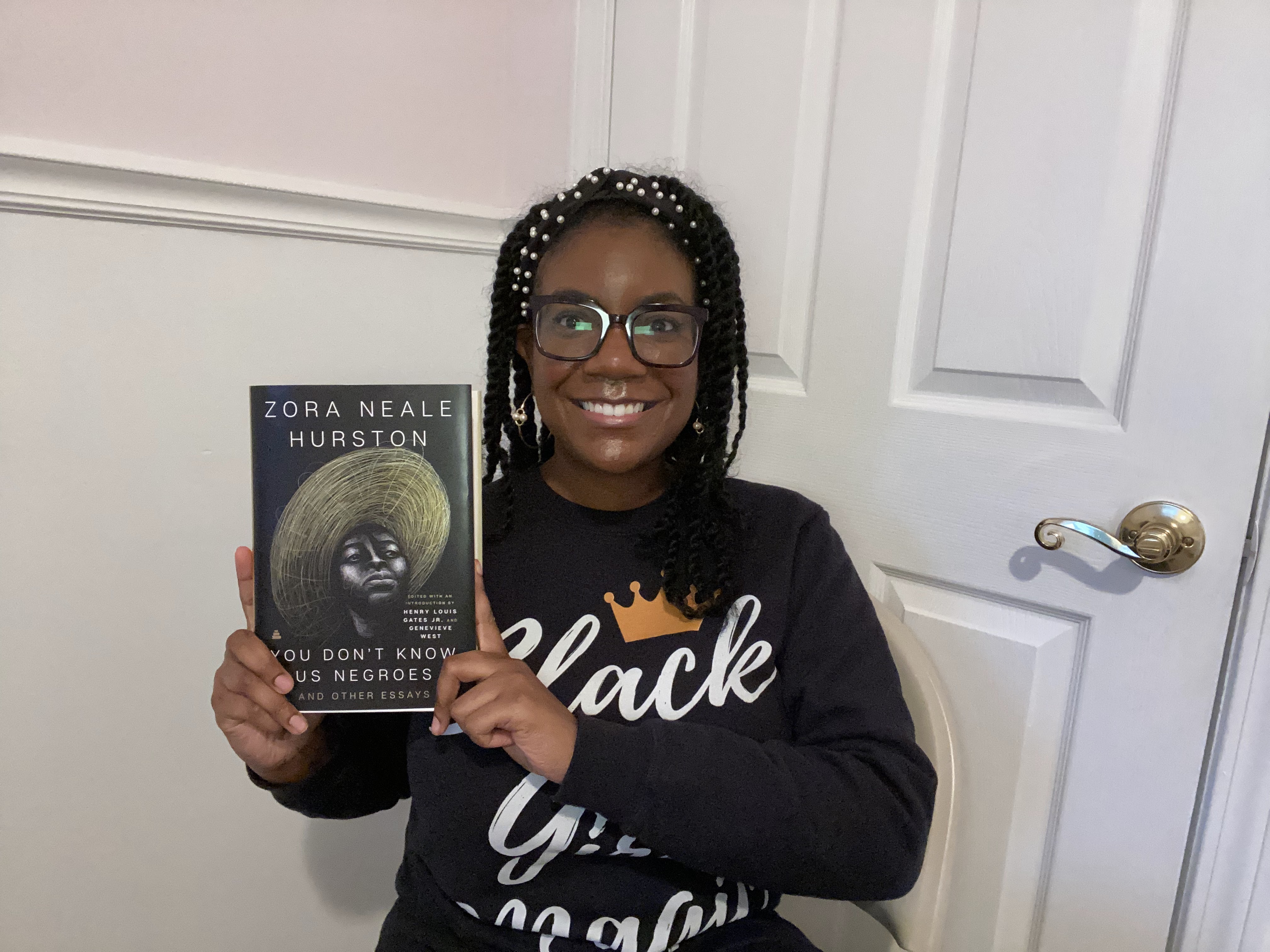
You Don’t Know Us Negroes by Zora Neale Hurston is a collection of essays that expand on topics such as African-American history and folklore,  art, politics, race, and gender. The collection is spread out over five sections “On the Folk”, “On Art and Such”, “On Race and Gender”, “On Politics”, and “On the Trial of Ruby McCollum”. Each section is filled with Ms. Hurston’s beautiful prose and descriptive language. 

Review:

Zora Neale Hurston’s imagery cannot be matched. I don’t know that I’ve ever read such passages that captured my senses. Ms. Hurston is so unapologetically Black in every essay and is clearly writing to an audience of her people. She is not at all concerned with the white gaze. These essays that were written so many generations ago are truly a breath of fresh air. Ms. Hurston’s words are for me and you that identify with the Black experience. We get a taste of Ms. Hurston’s vast talent as we are able to read various genres within this collection including fiction and nonfiction writing. There are times that I truly felt as though Ms. Hurston’s words could have been written today, she was a woman ahead of her time in terms of her vision as to what was happening to Black culture, specifically the way in which it was being watered down. 

Ms. Hurston challenges us to embrace the real and imaginative creative work of Black people. Our rich history is nothing to be ashamed of – in spite of all of the tragedies befallen on Black people we have proven to be triumphant and excellent in every avenue that we are given the opportunity to pursue to the fullest extent. 

Although, the collection is split into subjects, there is a chronological list of the essays so that you are able to read the essays in order – which could potentially give context to Ms. Hurston’s frame of mind as she wrote each essay. 

This collection is truly powerful and I would recommend it to anyone who wants to read more from Zora Neale Hurston or who is looking for authentic takes on Black culture and politics. Take a moment to open your mind to think and imagine

Podcast Episode 2 Show Notes

In honor of Black History month  The Bootleg Book Club read You Don’t Know Us Negroes by Zora Neal Hurston. 

About the Author

This book revitalized the well deserved attention and recognition towards Zora Neale Hustron. Zora was born in Alabama, but grew up in Eatonville, FL, an all black community. Evident in her writing that she grew up around Black excellence and believed that there was no need to cater to the white gaze. She was a novelist, filmmaker, and anthropologist. She was a student at Howard and then Barnard. She was married several times over, but did not stay married. While a decorated and well known writer, unfortunately, she was never properly compensated and buried without a headstone until Alice Walker (another great novelist) found the grave and gave her a headstone in 1973. 

Book Look

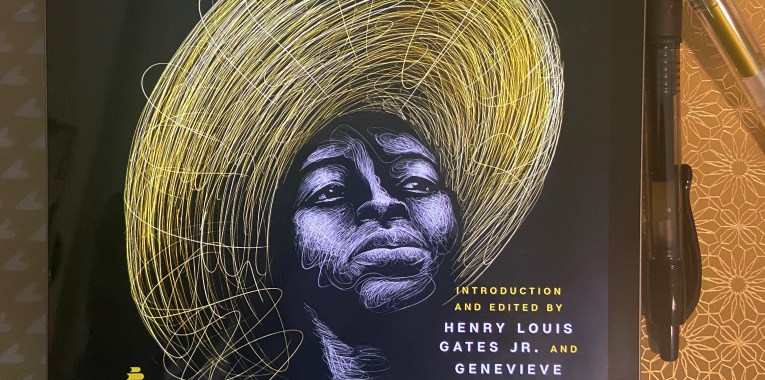
  The book is a collection of Zora Neale Hurston’s writing that expresses the essence of the Black community. Curated in five different sections the reader is given an in depth view on how Hurston believes the Black  community is portrayed in society.  

Bookmark

This collection of work has many moments to highlight. Here are a few of the noteworthy factors we mention:

  • “First off he was a whisper, a will to hope, a wish to find something worthy or laughter and song.” p 28
  • “Contrary to popular belief their creation is not confined to the slavery period.” p 76
  • “But, I am not tragically colored. There is no great sorrow dammed up in my soul, nor lurking behind my eyes. I do not mind at all. I do not belong to the sobbing school of Negrohood who hold that nature somehow has given them a lowdown dirty deal and whose feelings are all hurt about it. Even in the helter-skelter skirmish that is my life, I have see that the world is to the strong regardless of a little pigmentation more or less. No, I do not weep at the world – I am too busy sharpening my oyster knife.” p 187 

POV

We discussed a few of our favorite pieces from the book but overall we found that the writing style itself was quite vibrant, poignant, and spectacular to read. On the other hand it was quite difficult to read certain parts because it was challenging to determine when Zora was writing fiction or nonfiction. 

Deep Dive

 Hurston tackles subjects such as Black excellence, exceptionalism, colorism, integration/segregation, equality/justice, family, love, Black womanhood, singleness, faith, and mental health. We review and analyze each section on  the folk, on race & gender, on politics, and on the trial of Ruby McCollum. 

Podcast 2: You Don’t Know Us Negroes
Podcast 2

Podcast Episode 1 Show Notes

For the first episode of The Bootleg Book Club, Sam and Felicia discuss Lizzie Damilola Blackburn’s debut novel Yinka, Where is Your Huzband? The sisters introduce themselves and why they decided to join the online reading community including #Booktube and #Bookstagram. 

About the Author

The background on Mrs. Blackburn and the influence of her British Nigerian culture in her book. 

Book Look

  The main character Yinka is feeling a lot of pressure to get married by her mom and aunt. Especially considering her younger sister and cousins have already found love. 

Bookmark

Some of the most poignant moments are discussed through the girls favorite quotes they found highlight worthy such as 

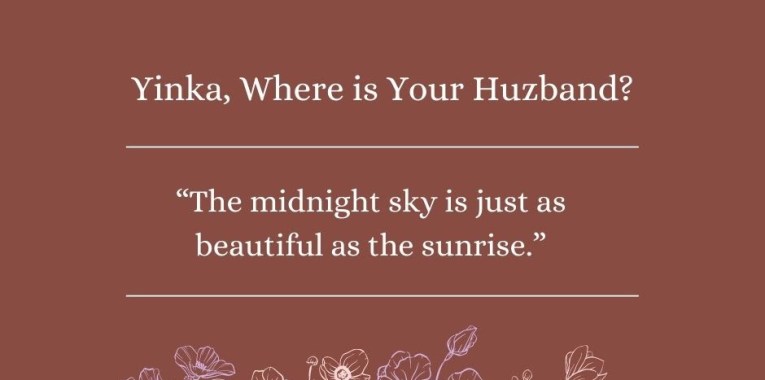
  • “The midnight sky is just as beautiful as the sunrise” p. 73
  • “I am who  I say I am” p. 132 
  • “Don’t be suffering in silence” p. 264
  • “You see, I’m responsible for my happiness” p. 174 
  • “Well, that’s the way God made you. That explains things. As long as you’re happy.” p. 214  

POV

Sam and Felicia discuss their favorite characters, Nola and Aunty Blessing as well as their least favorite character Ola. 

Deep Dive

Felicia and Sam share a few spoilers and talk in depth about the book’s themes such as family, love, Black womanhood, singleness, faith, and mental health. 

Podcast 1 Youtube: Yinka, Where is Your Huzband?
Podcast 1 Spotify: Yinka, Where is Your Huzband?